Why Do I Feel Like This?
The first sign of perimenopause often isn't a hot flash, but the realization that "I don't feel like myself"
Why Do I Feel Like This?
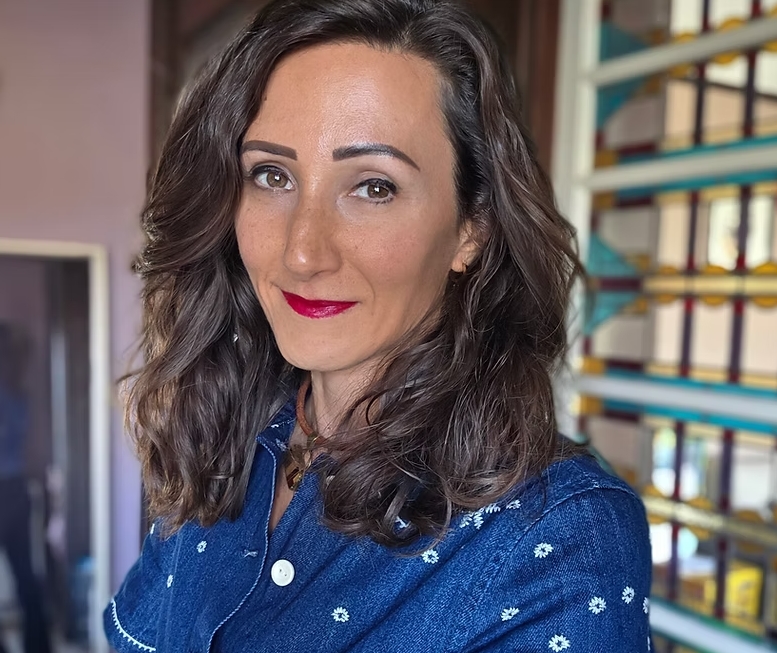
By Nazlı Medeni, ICF-certified Life and Functional Medicine Wellness Coach
You are working from home, sitting in front of your laptop, about to start your usual workday. There's a cup of tea beside you, a little sunshine coming through the window, and suddenly you start crying. No apparent reason. You haven't cried for years. This isn't you. But who is it, then?
The first sign of perimenopause often isn't a hot flash. Sometimes it isn't even a change in your cycle. It's five words that many women never connect to their hormones: "I don't feel like myself."
Researchers now take that feeling seriously: in a 2024 survey of midlife women, 63% hadn't felt like themselves at least half the time over the previous three months. The symptoms most closely tied to that feeling included anxiety, exhaustion, brain fog and swings in mood, symptoms most of us don't connect with menopause.
I hear it in my practice all the time, usually followed by: "I have no menopausal symptoms, just have stressful work/life. So why do I feel like this?"
She's tired in a way sleep doesn't fix, short-tempered with the people she loves most, and on top of it all, a little guilty. Ungrateful, even. If this sounds familiar, there is a reason.
Around 40, life might hit hard
Perimenopause symptoms arrive in different varieties and intensities. Up to two in three women notice their thinking getting foggier, and around the same number live with aching joints and muscles.
At the same time, many of us have spent years focused more on giving care than receiving it. We're in more senior roles at work. There may be financial pressure. And there are often kids going through puberty, weathering their own storms.
Put all of this together and you have quite a bunch to carry at once that makes it hard to feel at ease, let alone grateful.
"I never needed help before"
One client told me: "I never needed help before. Why is it so hard to change things now?" She is not alone.
Women turn to me for coaching, frequently when the physical symptoms get so loud they're impossible to ignore. The sleepless nights, the 3 pm crash, the weight that won't shift, the body that suddenly feels like a stranger's.
So we work on the body: sleep, food, movement, stress. That matters. But something else almost always happens along the way. The conversation moves from her body to her life.
This is where wellness coaching meets life coaching. What many women are really looking for is a companion: someone who gives them permission to let go (or to do something different) and helps them feel like themselves again. No single person can do that for another human being, especially for a woman in perimenopause. But, this isn't as bleak as it sounds. What I can do is help her become her own companion. That's the metamorphosis I love to witness.
From "I can't" to "why not?"
- "I can't" turns into "maybe", and in time "why not?"
- "I'm not sure" turns into "actually...", and in time "I trust myself."
- "I always do this..." turns into "When did I learn to respond like this?", and in time "I can choose my response."
- "I should..." turns into "I get to...", and then one day, "I want something else."
So many conversations turn upside down, just like life itself in perimenopause. Everybody's path is different, of course. But in my experience, where there is discomfort, there is transformation.
If you don't feel like yourself, start here
Sit with these questions for a moment. You don't need to answer all of them. Pick the one that stings a little.
- If a friend told me she's been going through something similar, what would I say to her? Do I say the same to myself?
- When did I last do something only because I wanted to, not because it was useful or expected?
- What happens in my body when I say yes to something I don't want? A tight jaw, shallow breathing, the afternoon crash?
- What am I carrying that was never mine to carry?
- What would "feeling like myself" look like on an ordinary Tuesday?
And on the hormonal side: track your symptoms alongside your cycle for a few weeks, and take those notes to a doctor who knows perimenopause. A single blood test often won't tell the full story, because hormone levels swing so much during this time.
Your body and mind are one conversation
If "I don't feel like myself" has hit you too, now you know there is a reason. Your hormones are shifting while you carry more than you ever have. They lower your threshold, and the life you've been holding together suddenly becomes too heavy to ignore. And you're not alone: many women are going through this without being able to put their finger on it.
Your body and your mind aren't two separate problems. They're one conversation. The hormonal transition isn't only something to get through. It can be the nudge to look at the possibility of a different life or mindset.
You don't have to do it alone, though. The right support makes the road less lonely and a lot less confusing: a friend who listens without fixing, and a coach who sees you as a whole, helps you connect the dots, guides you through the lifestyle changes you need. That last one is the work I love doing.